


Meet the designer: Sharron Lee of sofen
G&G _ Magazine speaks with designer Sharron Lee, founder of sofen, about questioning familiar forms, bringing architectural thinking into textiles and discovering new possibilities within everyday objects.
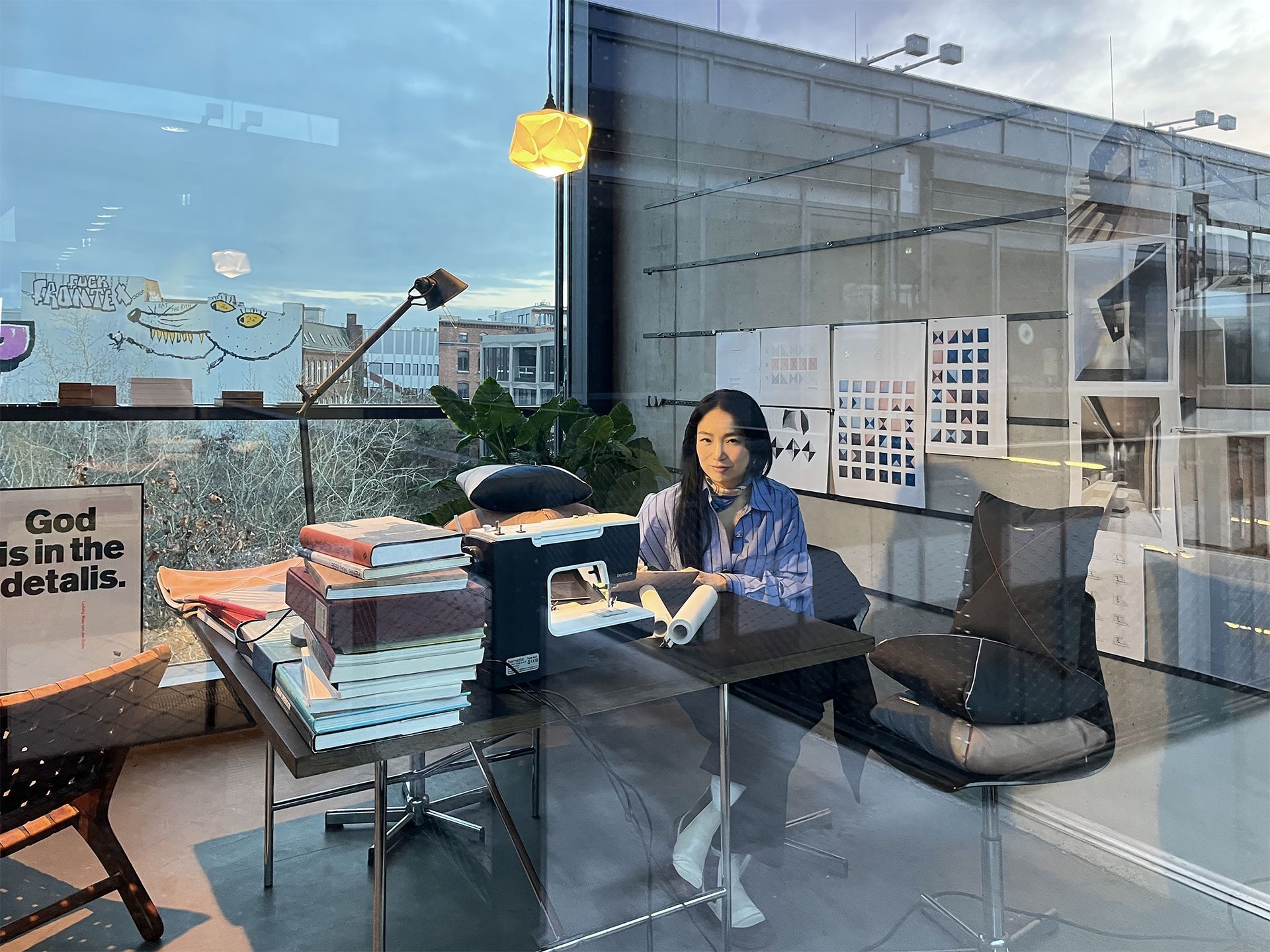
Founded in Berlin by Sharron Lee, a designer trained and worked in architecture with more than two decades of experience spanning architecture and contemporary art, sofen approaches textiles from an unexpected perspective, questioning the familiar forms and conventions of everyday objects. Bringing an architectural way of thinking to the cushion, Sharron transforms it from a traditional decorative element into an object defined by structure, proportion and dimensionality. Through subtle interventions in form, carefully considered materials and a distinctive visual language, sofen invites us to look again at what we think we already know.
Your background is in architecture and contemporary art. What led you to turn your attention to an object as familiar and seemingly simple as the cushion?
I trained in architecture, and for the past twenty years I have been developing artworks and managing the production in a contemporary art studio in Berlin — work I still do, and two decades of taking ideas seriously enough to build them. sofen grew alongside it. I didn't look for a spectacular object; I looked for the most familiar one. The cushion is in every home and almost nobody questions it — its front, its back, its role as decoration is pure convention. That made it the right place to begin. sofen's credo is “take nothing as given”.
One of sofen's defining gestures is pulling the edge of the cushion inward, transforming a familiar detail into a structural element. How did this idea develop?
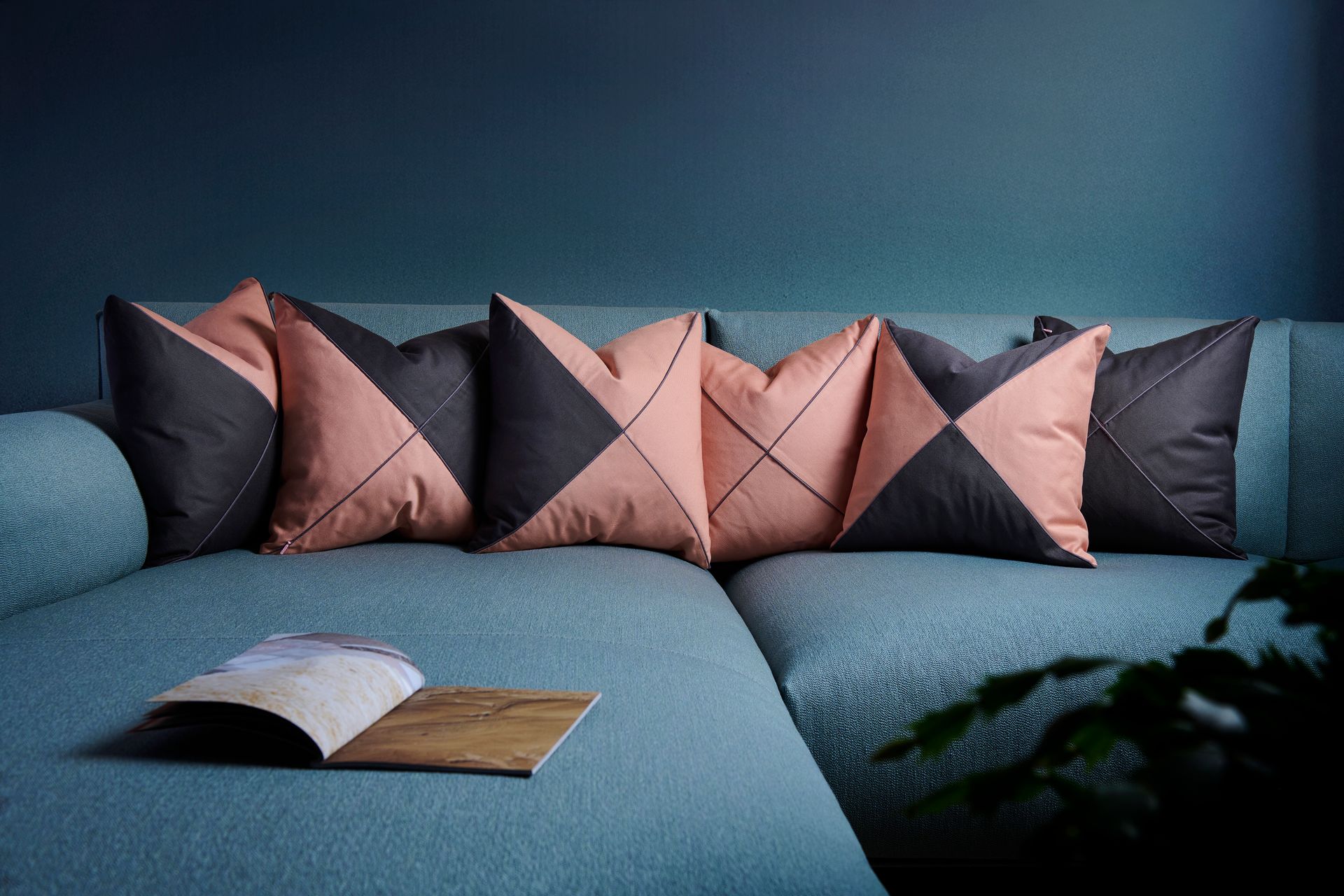
It came from looking at what a cushion cover actually is: a container. Once you see it that way, the edge stops being an outline and becomes structure you can work with. Shifting the edges inward turns the seam into the diagonal cross that divides each face — the cover stops being a flat square with a decorative front and becomes a small three-dimensional form with its own geometry: no front, no back, surfaces that meet. I started by designing the patterns, and it came together fairly quickly; when technical questions arose, I asked professional tailors for advice. I sewed the first pieces for my own home — that was the brief.
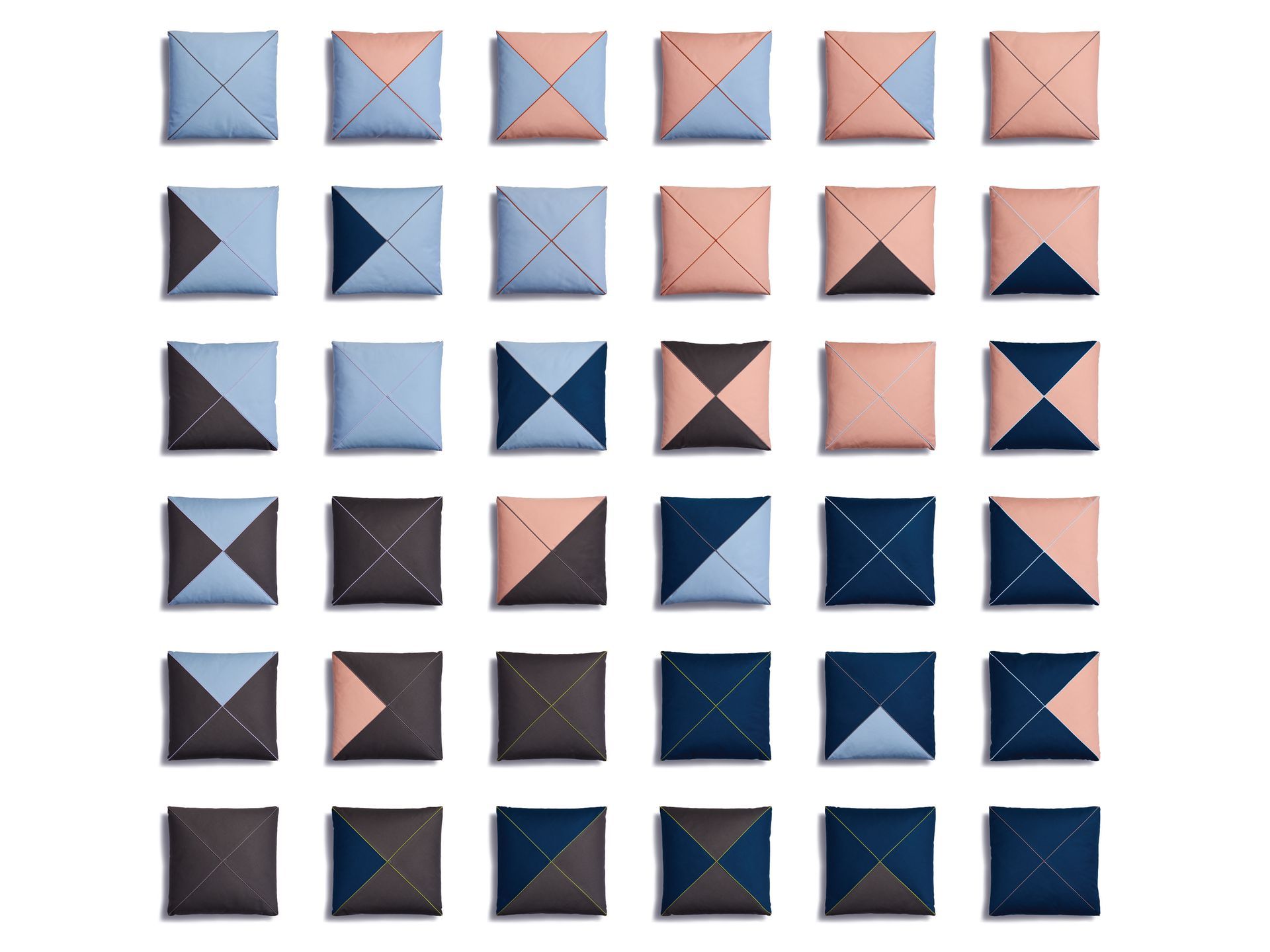
The collection is defined by a carefully considered palette of four colours — Rain Pebble, Shell Pink, Soft Blue and Ocean. What guided these particular choices?
The colours follow the concept of the collection. Edition Shore is drawn from the light at the water’s edge, while its six families — Day, Dawn, Haze, Nude, Salt and Shade — move through that light and atmosphere. Four colours and one structure create 36 combinations, which is precisely the point of the palette: small enough to remain quiet, yet broad enough to compose with. Colour exists as much in the arrangement as it does in the individual piece.
Material is clearly important to the collection, particularly your exclusive use of GOTS-certified organic cotton. How does the choice of material interact with form and tactility?
The outer cushion, the pink inner cushion, and the pipings are made with GOTS-certified organic cotton — The outer twill has enough body to hold the geometry — the form needs a fabric with structure, not drape — and its surface takes the light along the seams, which is where the design lives. I very much believe designers carry a responsibility, and choosing the best sustainable materials is part of it: certified rather than claimed, down to the invisible zipper, whose tape is made from recycled PET bottles.
"I want no shortcuts — I want the work to be conscious. Each piece is sewn to order by tailors in Berlin; nothing is made for a warehouse."
Pink appears as a distinctive detail within the collection. What led you to introduce this accent?
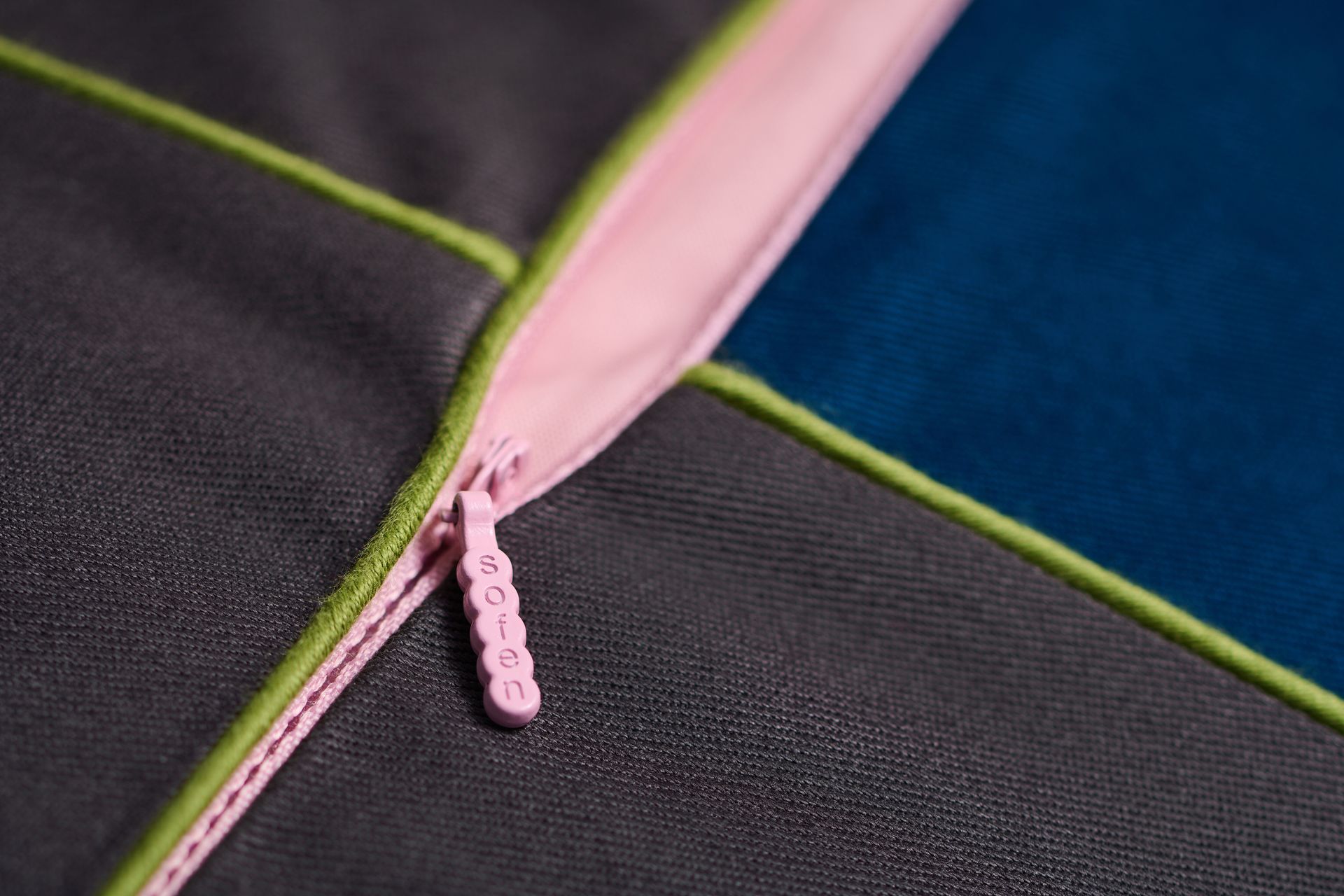
The pink is the inside. The lining and the zipper pull carry the most deliberate colour in the collection, in the place convention says nobody looks. And it is not a secret: the invisible zipper runs the full diagonal of the cushion and invites you to pull it back. Whoever opens it finds the inside treated as carefully as the outside — that reversal of attention is the point.
Looking ahead, do you see sofen's approach extending beyond cushions into other familiar objects or areas of the interior?
sofen is a design studio, and Edition Shore is its first investigation. The method travels: take a familiar object, take nothing about it as given, and see what one structural change does. There will be more objects of the interior — which ones depends on what catches my attention and holds my interest. I would rather show them than announce them.
This is sofen's first time exhibiting at Maison&Objet. What does this debut represent for you and for the brand? And why now?
It is the first time work goes out under sofen's own name, and being selected for the Design District made it the right door to walk through. For me it is all part of one journey — the same seriousness about making, now applied to my own questions. The timing is straightforward: the collection is ready as a system rather than a prototype — 36 pieces, made to order, production standing in Berlin. And Maison&Objet is where the people we want to work with actually look: interior designers, architects, buyers. We come to be seen, and to listen.
Official Website sofen.co
SHARE THIS
Contribute
G&G _ Magazine is always looking for the creative talents of stylists, designers, photographers and writers from around the globe.
Find us on
Latest News


Subscribe
Keep up to date with the latest trends!
Popular Posts