
Madrid Design Festival 2026 & the Main Topics
From 6 February to 8 March 2026, Madrid will once again become a major international stage for design with the ninth edition of Madrid Design Festival (MDF), organized by La Fábrica. Under the theme Redesigning the World, MDF26 reaffirms its vocation as a platform that promotes design as an essential tool for transforming processes, systems and ways of life, embracing a broad vision that spans industry, craftsmanship, innovation, economy and everyday experience.
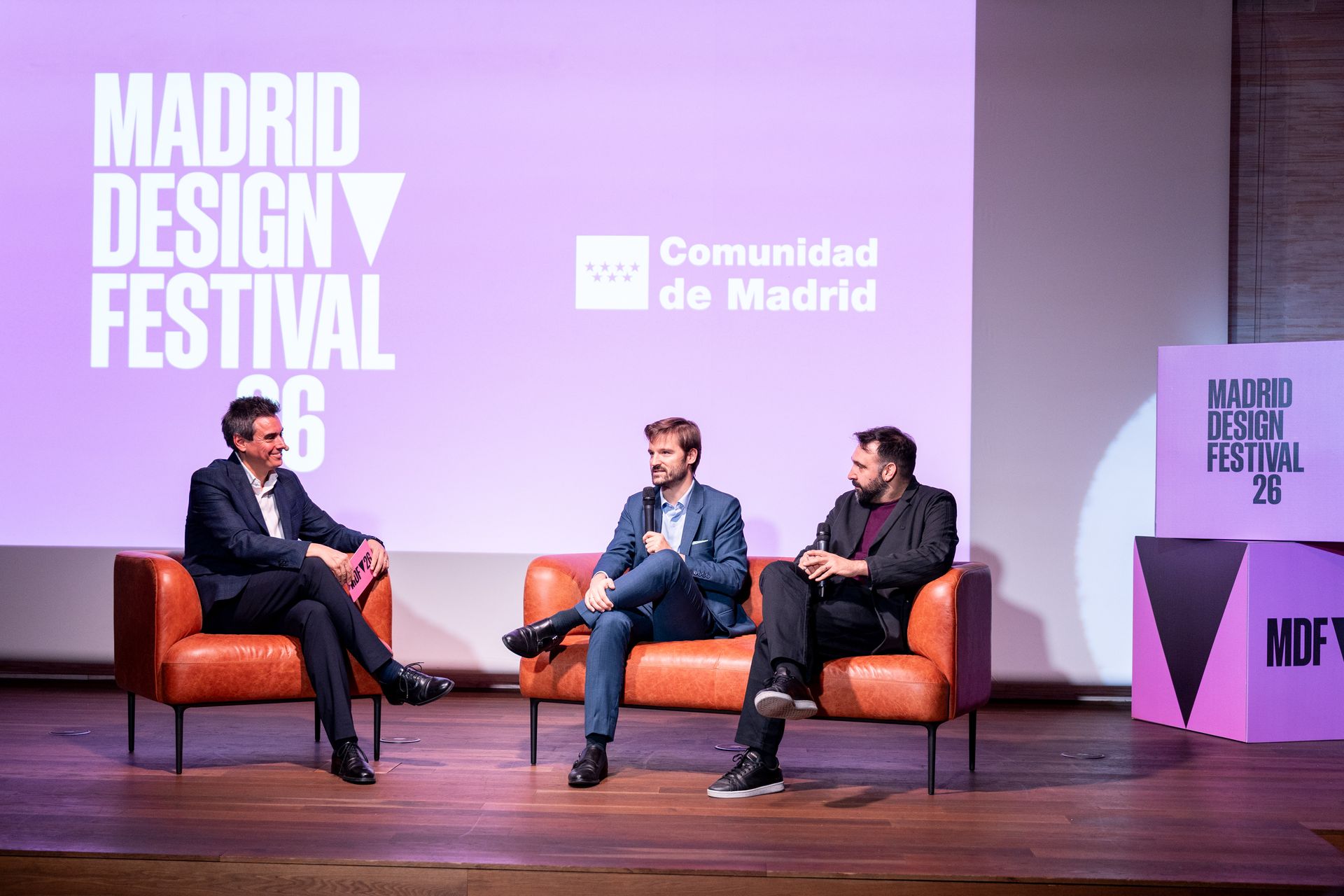
Since its inception, Madrid Design Festival has positioned itself not merely as a cultural event but as a strategic framework for dialogue. The 2026 edition strengthens this identity by structuring its program around four defining dimensions of design: Responsibility, Transcendence, Impact and Transmission.
Responsibility addresses design’s ability to respond to real needs and contemporary challenges — from environmental urgency to social equity. Transcendence reflects the enduring mark that design decisions leave on how we inhabit spaces and shape communities. Impact underscores the discipline’s capacity to transform environments, economies and social structures. Transmission highlights the continuity of knowledge and the exchange between generations, reinforcing design as a cultural legacy as much as a forward-looking practice.
Key Themes: From Bio-Design to Circular Economies
The MDF26 program explores some of the most pressing frontiers of contemporary practice. Bio-design and biotechnology take center stage, examining how living systems and scientific research are redefining material innovation. Traceability and next-generation alternative materials address transparency and sustainability in production processes, while discussions on circular economy and mobility reflect the discipline’s role in reshaping urban and economic models. Equally central is the social and community dimension of design: an area where collaboration, inclusion and participatory processes become critical tools. Craft is framed not as nostalgia, but as a territory where identity, culture and material heritage intertwine, showcasing exemplary practices from Spain and abroad.
International Voices and Leading Figures
The 2026 edition brings together an outstanding constellation of international and Spanish designers, reinforcing Madrid’s global positioning. Among the featured names are Patricia Urquiola, Enorme Studio, Héctor Serrano (National Design Award 2025), André Ricard, Luca Nichetto, Sebastian Bergne, Kavita Parmar, Loumi Le Floc’h, and Studio Dumbar with Liza Enebeis as a leading figure in motion design. Designers such as Pau Aleikum and Petra Janssen further expand the program’s focus on social and community-driven practices.
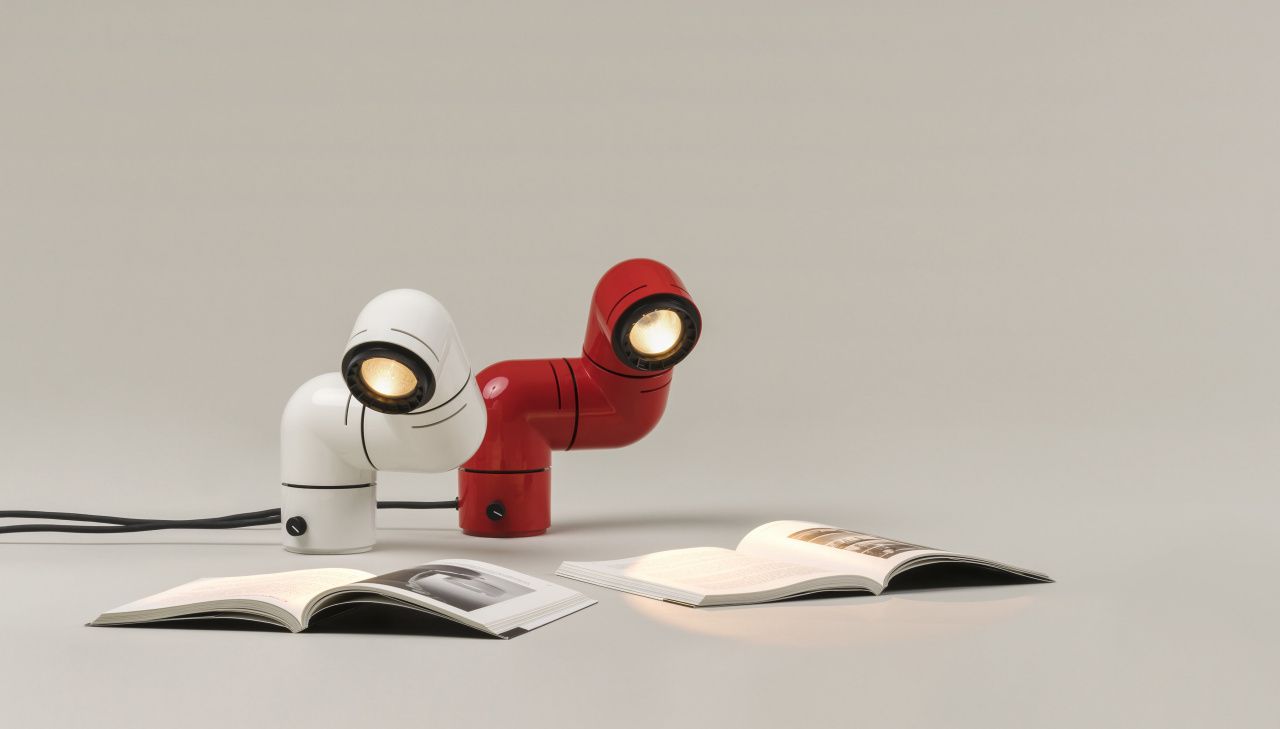
André Ricard. Design in use Exhibition
Curated by Marina Povedano and Arnau Pascual
Madrid Design Festival and La Fábrica present a major retrospective dedicated to André Ricard, a founding figure of industrial design in Spain and an essential reference in contemporary material culture. Produced by La Fábrica and Madrid Design Festival, co-produced with Disseny Hub Barcelona and the FAD, with the support of AC Marca and Tatay, the exhibition reviews more than six decades of work through his most emblematic pieces, his thought processes, and his influence on the evolution of design in our country.
Location: Teatro Fernán Gómez. Centro Cultural de la Villa, Madrid
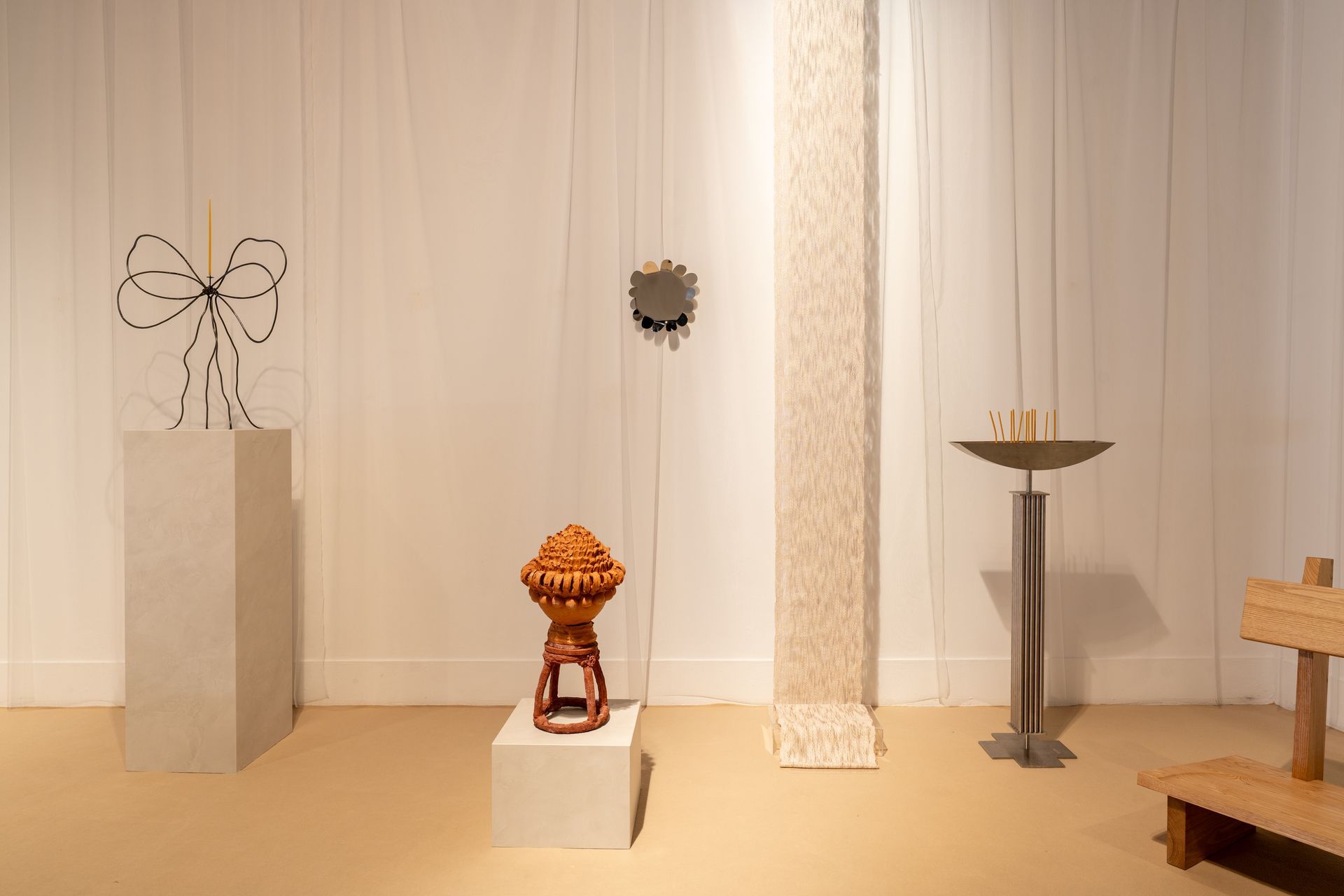
Mediterranean Manifesto Exhibition
Curated by Mariona Rubio Sabatés
Mediterranean Manifesto is a collective exhibition of collectible design bringing together more than thirty international artists and designers. Curated by Mariona Rubio, the exhibition is based on a very clear diagnosis: we live in a system that advances almost without questioning itself, on Mediterranean Manifesto, and design can help us pause, observe, and think differently. Its starting point is the Mediterranean, understood as a historical cradle of knowledge, innovation, and cultural diversity, but today deeply threatened by pollution, mass tourism, and industrial pressure. Mediterranean Manifesto presents pieces that address issues such as environmental impact, consumer society, and waste management, proposing new ways of relating to our surroundings.
Participating studios and creators include Canoa Lab, Lucas Muñoz, Justine Menard, Francesca Piñol, Malva Office, Valeria Vasi, Otra Objects, Panorammma, Xavier Mañosa, Worn Studio, and Yoyo Balagué. Their works revive traditional Mediterranean crafts such as ceramics, glass, basketry, textiles, and carpentry, placing them in dialogue with contemporary languages, recycled materials, and new materialities.
Location: Teatro Fernán Gómez. Centro Cultural de la Villa, Madrid
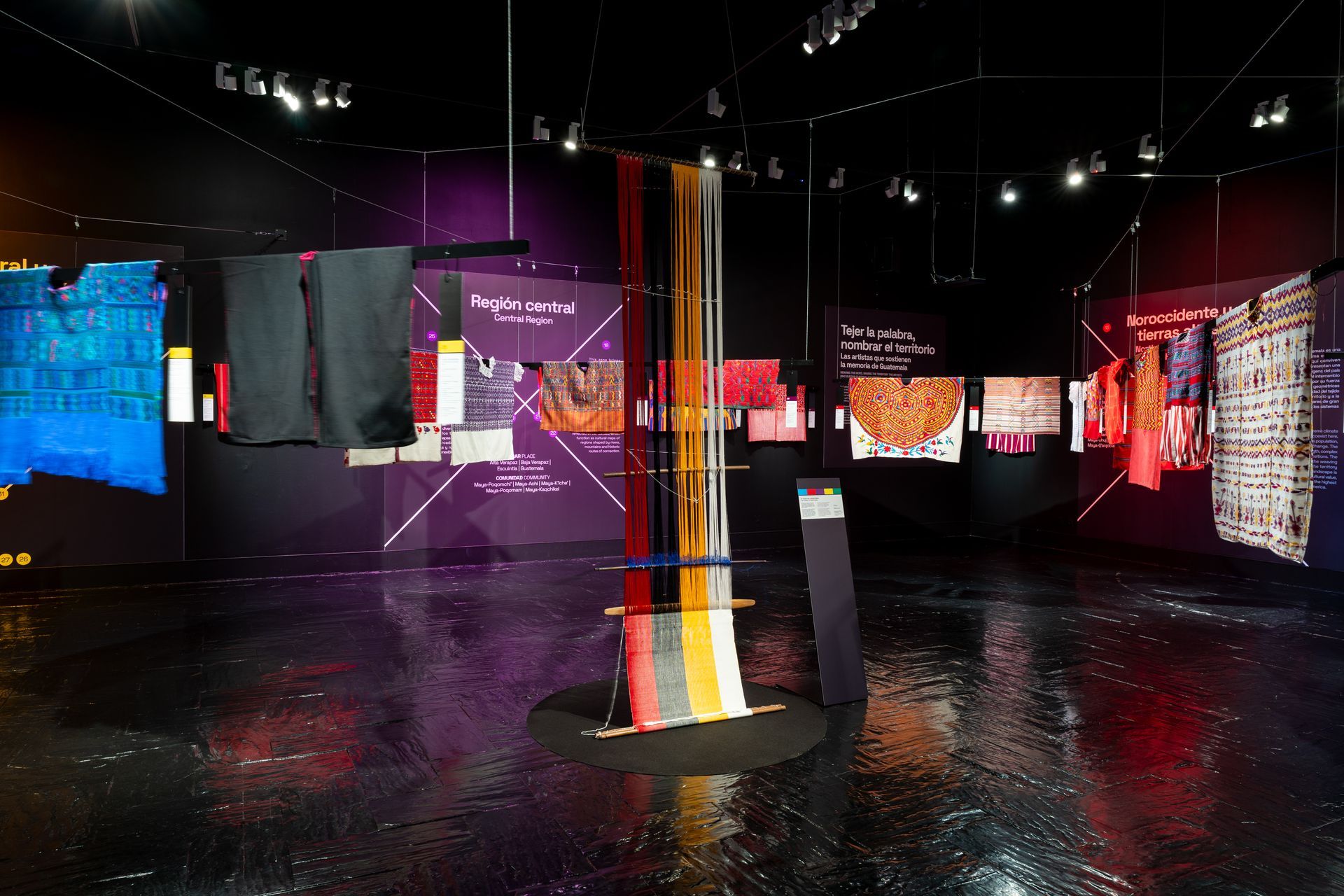
Textile Art and Guatemala: Design and Identity Exhibition
An initiative by INGUAT (Guatemalan Tourism Institute), directed by IDONIKA
The exhibition is an immersive space where the Guatemalan traditional textiles are revealed as one of the most sophisticated expressions of contemporary design. Conceived by Idonika, with architecture by Amarillo Studio and curated by Emiliano Valdés for INGUAT, the exhibition presents a universe where ancestral technique, community creativity, and formal innovation coexist within the same territory. The exhibition route is organized around a suspended structure of textile pieces that evokes the vitality of the Chichicastenango market, accompanied by projections that magnify details of patterns and compositions. Photographs of weavers and an immersive sound piece, with voices and languages from different communities, place visitors at the cultural heart of Guatemalan textiles.
Location: Teatro Fernán Gómez. Centro Cultural de la Villa, Madrid
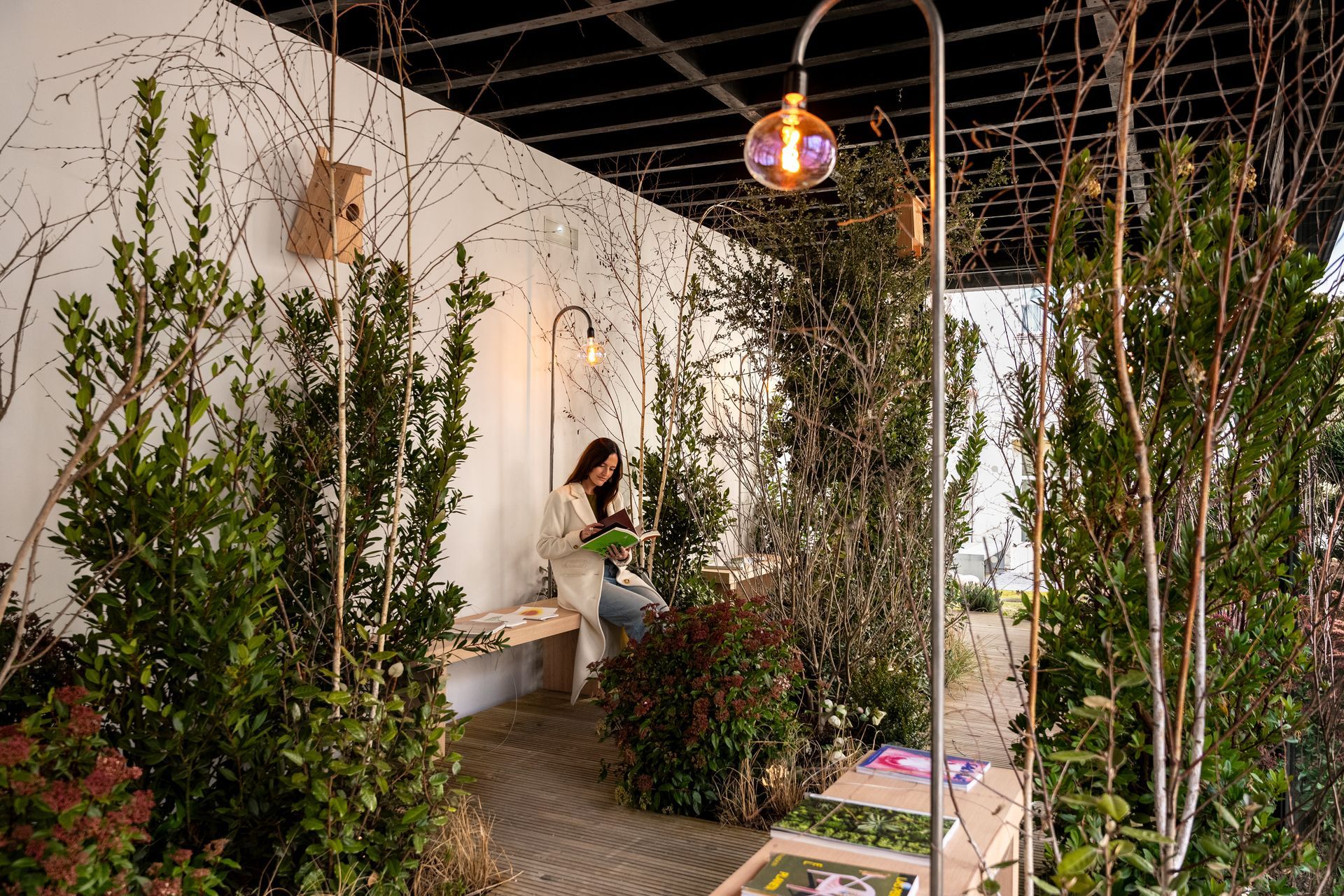
Fiesta Design: The Celebration of Design
Fiesta Design once again becomes the great public celebration of MDF, a living and participatory space that each year welcomes more than 20,000 visitors through installations, workshops, talks, presentations, and open experiences. From February 12 to 22, Fiesta Design proposes the diversity and vitality of contemporary design: from Generational Relay, Amazon’s installation directed by Kavita Parmar, to the artisanal presence of Castilla–La Mancha; material innovation processes by SIGNUS; Guatemala as the guest country; the IED site-specific installation; interventions by Clínica Studio, Playincolors, and UDIT; and the immersive garden proposed by FINSA together with Enorme Studio and Álex Fenollar. With this set of proposals, Fiesta Design confirms itself as an open territory where institutions, brands, schools, and creators engage with citizens and make design visible as a tool for connection, experimentation, and transformation.
Location: Institución Libre de Enseñanza, Madrid
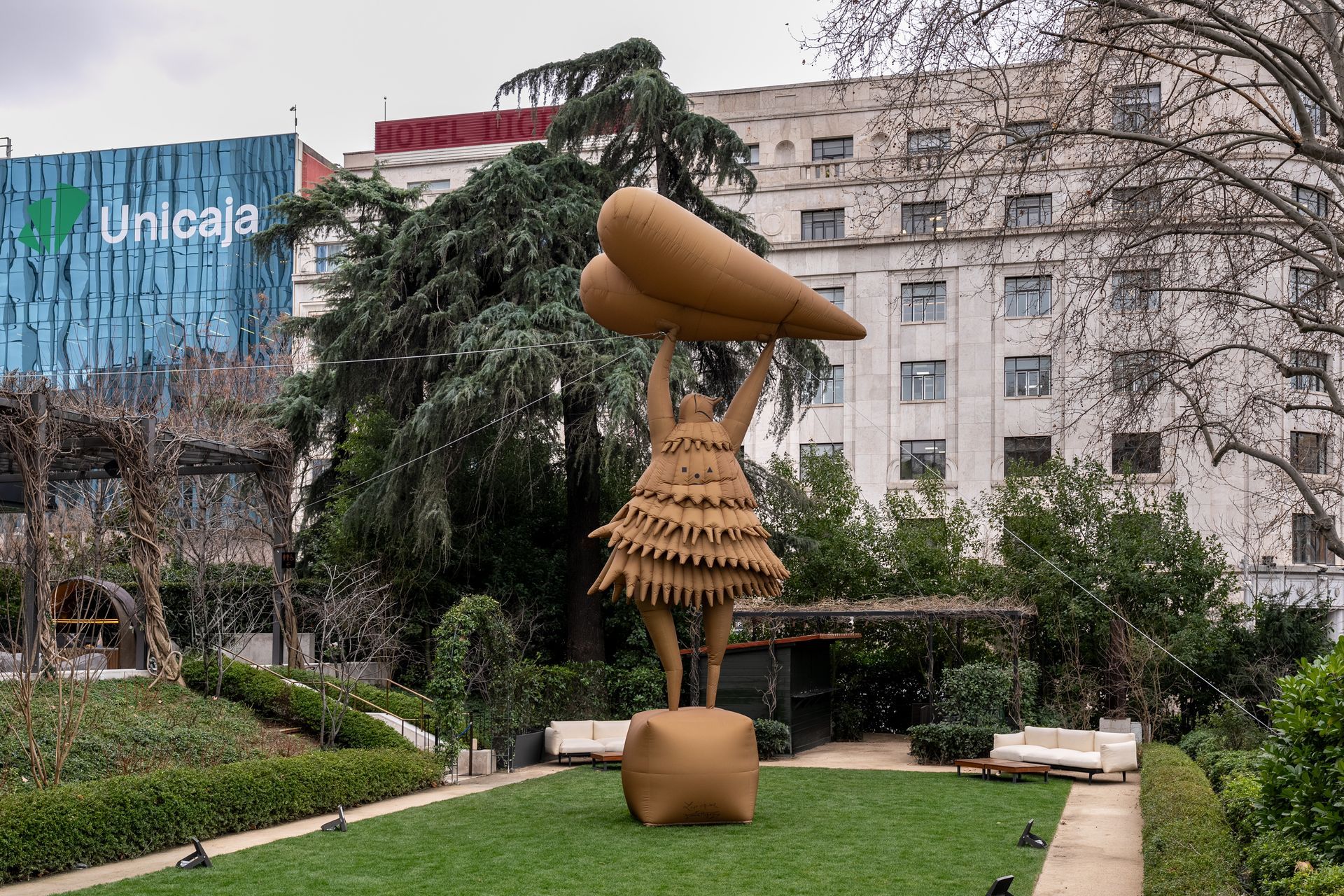
Love Catcher by Jaime Hayón presents at Hotel Villa Magna
Making part of the Soft Bronze series, this sculpture reflects on love as a force of resistance and collective connection. Located in the gardens of Hotel Villa Magna, the work invites visitors to pause and reflect on the role of love as an essential force that sustains, connects, and allows us to move forward, even in times of uncertainty. The piece portrays a figure stretching in a vital effort to reach a heart, suggesting that love is not a passive emotion, but an active exercise in
reaching, rising, and seeking. Through this poetic scene, Jaime Hayon constructs a metaphor about fellowship and the need to recover what brings us together in public space and shared human experience. Love Catcher is part of the sculptural series Soft Bronze, a body of work in which the artist explores the material and conceptual contrast between the monumental and the soft, the permanent and the ephemeral. In these pieces, lightweight and flexible materials visually evoke the solidity of bronze, marble, or brass, creating an aesthetic tension that challenges the logic of matter. The hybrid figure features a humanized bird, an enduring symbol of freedom in Hayon’s imagery. It appears heavy and solid, yet is suspended in the air, reinforcing its symbolic character.
Location: Hotel Villa Magna, Madrid
Alliance for Wool
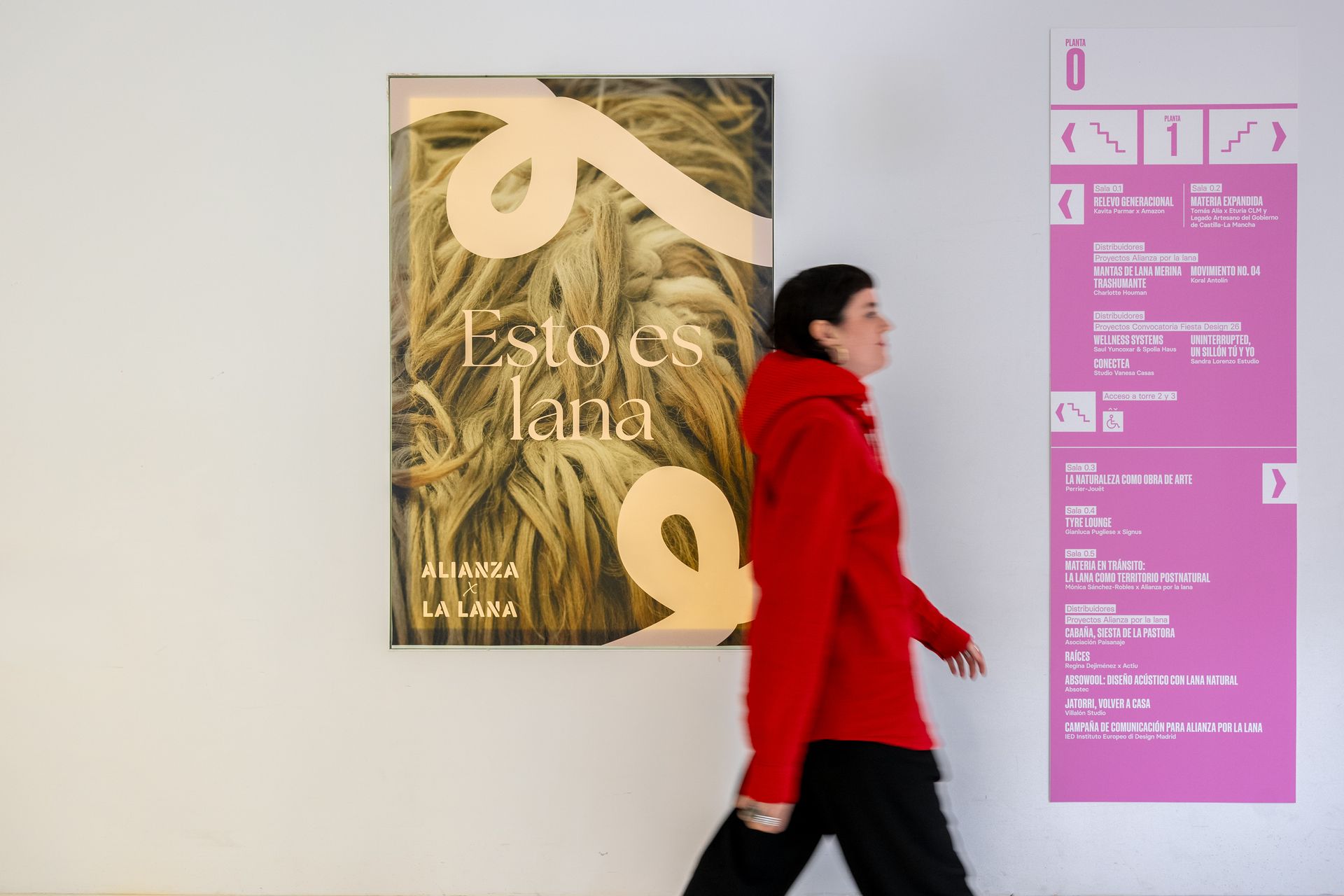
For the second consecutive year, MDF dedicates a full program axis to wool as a strategic material to understand the relationship between design, territory, and sustainability. This continuity reflects a growing commitment to a material that concentrates heritage, biodiversity, innovation, and craftsmanship. Under the umbrella of the Alliance for Wool, the festival brings together installations, talks, research, and projects that explore wool from multiple dimensions: as a living cultural resource, as an ecological agent, as a laboratory for new design processes, and as a driver of social transformation. Throughout this edition, the public will discover how wool articulates contemporary discourses on memory, future, materials, education, circularity and landscape.
SHARE THIS
Contribute
G&G _ Magazine is always looking for the creative talents of stylists, designers, photographers and writers from around the globe.
Find us on
Latest News

Subscribe
Keep up to date with the latest trends!
Popular Posts